Thursday, March 10, 2011

Corrections from the Assisterati

Oh, dear...this, again?

The New York Observer has published an article on assistants in the publishing world. That's assistants to editors, agents, scouts, and publicists (never mind those assistants in design, production, and on the financial side), the group of which the article’s author, Kat Stoeffel, has deigned to call "The Assisterati." Judging from the industry responses--and the responses of the assistants around me--Stoeffel has gotten quite a few things wrong in this article. So let's take them to task:

1) Where they come from: Of a gathering of the Assisterati, Stoeffel says, "most of the guests were already connected through a network of private colleges on the East Coast . . . Some were on intimate terms, having attended the same summer camp, the Columbia Publishing Course." Certainly yes, a handful of publishing assistants emerge from excellent colleges and universities on the East coast. And some of them attended intensive summer programs like the NYU Publishing Institute, the Columbia Publishing Course, and other such immersive workshops that cram a lifetime of publishing experience (and an extraordinary series of panels headed by industry leaders) into a brief six weeks. (It's not much of a summer camp, more like a graduate-school-level boot camp.) But Stoeffel makes this all seem serendipitous, a product of privilege rather than deliberate planning for a deeply desired career. First, the geographic and economic spread among entry-level publishing employees is fairly large: I've worked with assistants who studied on the West Coast, the Midwest, the Deep South, the EU, in India, and in South Africa, and all of them had widely varying levels of economic support by way of hard-earned loans and scholarships. Secondly, the choice to attend summer publishing programs is hardly made just to gain cultural cache. While these programs carry a price tag (about $7000 for CPC, $5000 for NYU), they represent a fraction of the price and time that a person would need to commit for a master's degree in English or Journalism (usually upwards of $25,000). And because they are focused on the questions and concerns surrounding the publishing industry, they provide a unique advantage for people that are deeply committed to having a long career learning its nuances of the industry. (Remember that phrase, "deeply committed" in mind.)

2) Who do they think they are? Stoeffel starts to go into the character and attitudes of the Assisterati: "They are the caretakers, soon to be inheritors, of a sublime patrimony. Their proximity to literary creation . . . suggests they possess a cultural credibility they couldn't acquire in, say, Chicago, or on Wall Street. Underpaid but brimming with hope, they, like the people they assist, will one day run this town and steer the course of American literature." If you care about what you do, if you believe what you're doing has worth, you will take a great deal of pride in it. I freely confess that, because I work in an industry that values intelligent voices and finds ways to promote them in the public cultural sphere, I think what I do has an intrinsic value and it gives me cultural credibility. People who work in publishing are part of a tradition (which is vastly different than a patrimony) of finding ways to disseminate great thoughts by great writers, and if that's what Stoeffel wants to call arrogant, then fine, we're arrogant. (And so are all the folks in the denigrated Chicago or Wall Street communities she mentions, since I'm sure they often take as much pride in their work as we do in ours.) And as far as her pithy remarks regarding the attitudes of assistants across different departments, it seems the antipathy she perceives comes from the pettiest of interviewees. When the assistants in our office gather every Friday for a glass of wine and an hour of laughs, it doesn’t matter whether their author is a Twitter phenomenon or a poet of critical acclaim, or if they wear the elegant heels of a publicist or the papercuts of an editor. They all earned the right to be there for a drink, to celebrate the tremendous work and dedication they do every day.

3) Why they ended up getting hired, and what they actually do: Stoeffel says that, while the Assisterati may have lofty dreams of controlling the literary world, their cultural cache is rarely put to work. “Once they settle into their cubicles, these traits are about as valuable as perfect punctuation in the cover letter of a slush submission.” She goes on to quote assistants who are daunted by administrative tasks and secretarial work such as arranging travel plans, mailing packages, and Xeroxing manuscripts. Most egregiously, she suggests that many assistants continue to do these tasks as the only method of harmoniously bonding with their bosses, who serve as “gatekeepers to the kind of meaningful work—acquiring or editing books—that they must master in order to move up the ladder.” Yes, any entry-level assistant will have some level of administrative work to do, and unless they’ve worked in an office setting before, some of it will be new to them. (I’ve often wished that colleges would create seminars for graduating seniors called “Office Etiquette and Paperwork 101,” just so you could learn the multitudes of UPS and FedEx mailing options before your first interviews.) But every office environment requires this. Until publishing becomes an all-electronic industry (god forbid), someone has to mail galleys and xerox manuscripts, circulate jackets and turn over the foul copy. These are all steps in how a house functions from day to day, and demonstrate what it means to be entry-level: to see the work from the ground-floor up. And the bond with the boss is not just about sucking up or playing a “shell game,” it’s also sometimes about having a true mentor-protégée relationship that can benefit both participants. I can show my boss how I learn about breaking media news by way of Facebook, Twitter, and my Google Reader; she can fill me in on meetings regarding developments in the e-book world and new acquisitions. The difference between the Mad-Men-esque secretarial role that Stoeffel imagines, and the reality of the symbiotic relationship between established editor and aspiring assistant, couldn’t be more stark. Stoeffel is writing from a perspective that says apprenticeship and grunt work doesn’t matter—strange, given that she seems to have skipped into her Observer position by way of three internships (the majority of which are unpaid and entirely made of grunt work). Curiouser and curiouser…

4) The ones that stick around: Stoeffel notes that many assistants harbor other dreams—of writing, of traveling, of becoming pastry chefs—and some eventually leave to pursue those dreams. This is hardly news—every profession experiences some turnover. But who Stoeffel forgets to address—the population she leaves out entirely—are the many, many assistants whose dreams are to become champions of great writers through deliberate scouting around the world, dedicated representation of an author’s potential, nuanced editing of an important text, and spirited publicity of a great finished product. Those who figure out that this business isn’t for them will often leave early, and we wish them well. But for those of us who are deeply committed to this business, to this process—the making of books—it’s deeply offensive to see our dedication branded as naiveté. For those of us that threw ourselves into high school and college English courses, edited our local papers and magazines, took on unpaid internships while waiting tables, and now spend nights and weekends reading manuscripts and magazines and attending literary events, this was anything but a light, romanticized career choice. And when a reporter writes a glib, poorly researched, and intentionally inflammatory article just to get the media community talking about how offended they are, it’s more than just a raspberry being blown our way. The Observer is not meant to be Stoeffel’s personal LiveJournal on which to snark and speculate and insinuate that other people are wasting their time. If anything, her article was a profound waste of our time. We, after all, have real work to do.

Monday, March 7, 2011

Publishing Movie Myths Debunked!

In the last decade or so, the film industry has given us several movie gems set in or about the publishing industry. Not surprisingly, they range from the laughably far fetched (Lindsay Lohan’s Labor Pains) to the fairly spot on (Suburban Girl and The Last Days of Disco). Even less surprisingly, the number of conversations about these films had by young people in the publishing business far outweighs the number of films. After five years of hearing our corridors light up with excited chatter about both publishing-centered movies that have just been unleashed upon the world and those that are now classics, I decided to have something of a movie marathon and see what all of the various fusses are about. Below, the things the movies in question got right, and the touches that are solely Hollywood’s!

The Wonder Boys

In this touching and very funny Michael Chabon adaptation Robert Downey Jr. plays Terry Crabtree, an editor who makes a sojourn to Pittsburg to visit Professor Grady Tripp (Michael Douglas), his star writer who is struggling to finish his second novel. (His first was met with a cascade of acclaim and put Terry Crabtree on the map as an editor.) Though discovering one great writer can indeed launch the career up-and-coming editor, that well-played acquisition usually leads to others. Being in a position to acquire is the key (as opposed to finding anything worth acquiring), and once you’ve jumped through all the hoops in front of you to acquire your first masterpiece the process usually tends to become easier. If Crabtree was hungry enough to sign Tripp up, it feels unlikely that he wouldn’t have found other manuscripts to further build his list. His being desperate enough to make a house call to a writer felt like a bit of stretch. That said, the sophomore slump can, sadly, be very real for successful debut novelists, and the movie gets the snarky writing workshop environment spot on!

Postgrad

The most obvious weakness in this light and fun rom com starring The Gilmore Girls’s Alexis Bledel is the premise that there’s a thriving book publishing industry in Los Angeles. Determined to take the publishing world by storm, Bledel’s Ryden Malby starts the movie thrilled that she has an interview with an editor at Hepperman and Browining, “the best publishing house in all of LA.” My “Um, what? There’s more than one?” was quickly followed by, “Wait, there’s even one?” That said, the details of a young assistant’s life are pretty accurate (we do tend to keep late hours, and manuscript reading is usually done on your own time unless you’re in the middle of a blissfully slow period), but in true Hollywood fashion, the diva-ish ways of those we report to are embellished more than a bit. (No, I’ve never had to scrape gum of the bottom of any editor’s shoe. Most editors keep all personal favors—even the humane ones—to a minimum.) Probably the most spot on is the detail that Ryden gets the coveted job months after she applied for it. The publishing world is so small that often times if an editor likes a resume or candidate who’s not quite right for the job in question they’ll save him or her on file for future openings, or pass them along to friends. Often times the job offer call comes when you least expect it. Sadly also true in that vein is the scene in which Ryden waits for her interview in a room full of other qualified and eager candidates. There are more aspiring editors than there are jobs!

Labor Pains

This movie also had the questionable premise of a publishing house based in LA, but because of all of the other details of the film that seem to be inspired by a magical world far far away from this one, it was less noticeable. This one pretty much gets everything wrong—publishing, human nature, comedic timing. In the weak plot, Lindsay Lohan invents a pregnancy to prevent her three headed monster of a boss from firing her from her editorial assistant job. I’m pretty sure it’s not illegal to fire a pregnant woman (especially one as inept at her job as Lohan’s character seems to be), just horribly villainous and heartless, which the boss in question certainly is. The other thing that sets this one apart from all the others that had at least a modicum of truth imbedded in their tales is that in every other movie here there was whiff of the glamour in the fledgling publishing careers on display. Sure, the protagonists worked long hours and struggled with the rigid hierarchy, but there was the sense that they were pursuing a dream that made the pitfalls worth it, not slumming it. Here the office feels a little bit like a desert version of the one featured on Steve Carell’s The Office, filled with unambitious nine-to-fivers who find most of their joy outside the work place. While not everybody in publishing is a beauty queen, the homeliness of Lohan’s co-workers and their simple, shoddy wardrobes seemed to be an intentional part of the plot, as if it was one of the defining characteristics of the business. While there’s a smiley acceptance of just about any clothing style in our offices (one of my favorite details of the work environment here) the vast majority of the office doesn’t find their wardrobe at vintage seventies thrift stores. Given that this is a Lindsay Lohan movie that went straight to video, none of this should be terribly surprising. The only real mysteries here are how they got so many real comedians to co-star (everyone from Creed from The Office to Janeane Garofalo has a bit part or cameo), and more importantly, how Amazon found people to give the DVD rave reviews. Seriously, check out the Amazon page and see how they glow! Really, America?

The Proposal

The office views found in this one are familiar (our offices, too, have walls of windows that look out on the Manhattan skyline), the author and publisher names they toss around like confetti are legit (with the exception of the imprint that über-editor Sandra Bullock and her assistant Ryan Reynolds work for), and yes, it really is THAT big of a deal to land Oprah. Less accurate is the power Sandra Bullock’s character holds over the entire floor, controlling and ruining lives en masse. While some big name bosses can demand a lot of personal attention and sacrifices from their employees, there’s no one person that everyone reports to directly. (And it must be said, some bosses are a dream to work for—I never once saw a super supportive mentor boss in any of these films, and they do exist!) No, Ryan Reynolds’s character is not too old to still be an assistant. There are very few jumps to make along the publishing ladder, even over an entire career (editorial assistant, associate editor, editor, senior editor), so you’re at each one for awhile. Also, the bigger the name you work for (or the more powerful the editor) the longer it makes sense to work for him or her. Despite the absurd (but hilarious) premise and Bullock’s wild twist as villain, the details ring pretty true.

The Last Days of Disco

It’s a bit tricky to evaluate this one for accuracy as a publishing novice in 2011, given that it’s set in the publishing world of the seventies. Perhaps a more interesting question than what is accurate about this and what is made up is what from that now antiquated world has remained in our current one. Believe it or not the typewriters that line the sets of this movie are still typing strong along senior editor row in 2011. It’s only recently that some of our legendary veterans and path pavers have made the switch from typewriters to computers. While crafting a reader’s report is no longer as communal an effort as it seems to be in the film, the dream of all young assistants seems not to have wavered from then to now: an associate editor gig is what we’re after. Perhaps most interesting is that in the movie—which came out years before the James Frey scandal—the protagonist’s dream book that she is finally able to sign up turns out to be fraudulent. The author made it all up and presented it as fact. Looks like the non-fiction Pinocchio problem that rears its head in a major way every few years is a tale as old as time. Despite the publishing details and their veracity or lack thereof, this is a fabulous film that I’d recommend to just about anyone, not just those interested or invested in the business.

Suburban Girl

This one is based on a handful of stories from Melissa Banks’s collection The Good Girl’s Guide to Hunting and Fishing, which is one of my favorite books about publishing, or just about anything, really. The opening scene, in which the young associate editor protagonist named Brett Eisenberg (yes, named after that Brett, and played by Sarah Michelle Gellar) moves copies of her latest book to the front of her neighborhood book store didn’t ring quite true only because book placement is a detail managed by the marketing and sales departments as opposed to editors. The only other slight veer off course was a scene at a book party, in which the rude and legendarily literary host pushes the young Brett aside to speak to her older and more established suitor. Though it’s not uncommon to be the youngest person by about twenty years at the book parties we assistants attend, I find that the older and more established writers and editors are rather embracing. (I’ll never forget when Gay Talese approached me at a book party just to find out how things are going in the publishing industry these days, and what it’s like to be a young person in the trenches.) Seeing a younger set nervously clutching a champagne flute in the corner reminds them of their early days, I imagine. Some of my best conversations and contacts have been made at parties just like the one featured in that scene, and with people just as large in stature as the famous host. The rest of the film, though, is filled with deliciously spot on touches—everything from the copyediting marks that Brett scribbles across her manuscript pages to that magical moment when you see someone reading a book you’ve spent the last year working on; the reality of reader’s report insecurity and second guessing your opinion, and the conviction that at the end of the day you just have to trust your gut. Small touches like mentions of real life legends like agent Binky Urban also went a long way. Perhaps most notably, though, the movie is quite lovely in its capturing of the nostalgia that permeates our industry. Those who have been in this business for years love to talk about the legendary moments that dot its past—encounters with larger-than-life and infamous writers now long gone; the discovery of a book that went on to change the canon—almost as much as those of us just starting out love to hear them.

Thursday, March 3, 2011

Schmoozing and Boozing

Every career has its distinct sinful predilections: politicians have hookers; bankers have embezzling; musicians and moviemakers have imitations and outright theft of ideas. (What else can explain two movies this spring season about "friends with benefits"?) But for the publishing world--for writers and editors alike--it's always been the cocktail hour, the three-martini lunch, and the long whiskey hours of creation. Yes, booze has always had a central place in the world of literature, and not just for the writer pouring over manuscript pages late into the night.

In his Townies column today for The New York Times, writer and former editor at Harper's Magazine Theodore Ross delves into the rituals of the office cocktail, and how alcohol acts like a lubricant when it comes to talking shop, and making books. "The past few weeks the better part of my social life has revolved around drinks," he says, as he looks back on his last days in the office. "Publishing tends to liberally grease the runners of those it transports out the door." He's not wrong: whenever someone departs our offices, we often salute them with Dixie cups full of champagne, and then follow them out of the office with a happy hour nearby. But the tradition applies beyond farewells: Fridays at Five, chats with agents and authors outside the office, schmoozing at book parties and literary events. After a while, you start to feel like an extra on "Mad Men," even if you don't have a bar cart of mixers in your office.

Of course, this trend in the literary world is also famously destructive. Dozens of history's most brilliant writers, editors, and agents have been documented as alcoholics and party people. When you look back at their names--John Cheever, F. Scott Fitzgerald, Ernest Hemingway, Dorothy Parker, and so on--it's impossible to separate their reputations as artists from their reputations as drinkers. Some say it's the process of creation that makes them hit the bottle--after writing his masterpiece In Cold Blood, many said Truman Capote was so devastated by what he'd experienced in his bond with the executed murderer Perry Smith that it drove him to drink, and he was never the same after that. One has to wonder if it was the mood of the time to drink and socialize--the cocktail parties of the Paris Review back in the day were infamously debaucherous--or if it was the condition of creation. Is it an indispensable part of the life of the written word, to soak oneself with a bottle of gin?

But I don't mean to get too down on your social lubricant of choice--because alcohol does have one very good impact on the writerly experience: for those that can hold it and not fall asleep too quickly, it has a great reputation for making writers bolder, speaking their minds. (This was parodied to hilarious effect on a recent episode of Glee, in which the club's main diva readied herself with a glass of rose as she prepared to call someone to ask them out--the idea being, if she experienced more heartbreak, she'd have something worth writing songs about.) I'd heard multitudes of writing student friends talk about throwing back a martini before sitting down to write, to quiet the editorial voices in their head. Yes, this is psychosomatic drinking, but it can have real-world benefits every now and then. At the literary event I attended last night, the booze made sense: it was a Q&A at Powerhouse Books with Gabrielle Hamilton, the brilliant chef from Prune who has just written her memoir, Blood, Bones & Butter. I devoured a rough copy of the manuscript several weeks ago, and haven't been able to stop raving about it since. As I sat in this Q&A, listening to this funny, humble, beautifully unpretentious woman talk about her career in cooking, I sipped a complimentary cup of wine and felt emboldened to contribute to the discussion. The wine did much more than taste good, it may me brave enough to talk to a writer who had inspired and moved me through her work. If there's something to blame on the alcohol, I'm glad it was the chance to participate in a conversation about how we make books that make us better. And then we go home and throw back a few in anticipation of the work ahead...

Friday, February 25, 2011

What's in a name?

As you may know, Sunday brings us the Academy Awards, and I know at least one [tk]er has seen all ten Best Picture nominees. Embarrassingly, I've only seen three--and yet there are ballots to fill out and contests to win!

In the absence of actual knowledge, I'm resorting to what I do best: playing with words. Using only the ancient art of the anagram (with the help of an online generator), then, let's try to predict what film will win Best Picture.


Black Swan: Bawl Snack

Dim tidings for Natalie Portman: the anagram generator predicts two things she'll be doing on Oscar Night (however unlikely the latter). Black Swan will not win.


The Fighter: Get He Firth

I didn't think The Fighter was anyone's first choice for this category, but the anagram generator predicts otherwise! The dark horse of the Oscar race is gunning, it appears, to take out critical darling The King's Speech.


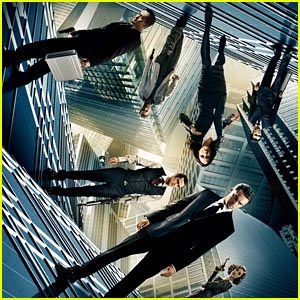
Inception: Nice in Top
Despite losing much of its initial Oscar steam, looks like Inception is among the likeliest contenders for the throne. The generator's diction is peculiar here, however: while we'd have to seriously consider Inception's taking Best Picture if it was "on top," being "in top" makes me think that it will lose, closely. Still, with this movie, who's to say what "on top" even means?

[The] Kids Are All Right: Harried Gals Kilt

It's unlikely, if possible, that the anagram generator expects Annette Bening and Julianne Moore to show up to the Oscars in kilts. No, I suspect this means the "harried gals" and their mostly lackluster (with the exception of Mark Ruffalo) movie will be kilt by the competition.

The King's Speech: Henpecks Eights

The anagram generator predicts--to no one's surprise--that The King's Speech will push aside most contenders--with the exception of one.


127 Hours: no anagram

The length of this title spelled out broke the anagram generator, exceeding the site's capacity. Let's assume that James Franco's manic energy--and any excess from director Danny Boyle--will similarly confound the Academy.


[The] Social Network: A Stricken Wool

Well, this bodes poorly for the flannel-robed Jesse Eisenberg. Sorry, Jesse, looks like The Social Network is out, although perhaps you'll win Best Actor for playing "a cloister wonk."


Toy Story 3: Tether Story Yo

It was always unlikely that Toy Story 3 would win, and the anagram generator throws in another harsh, yet valid, point--as others have pointed out, from what exactly is Toy Story 3's screenplay adapted? That story is untethered, yo.


True Grit: Trite Rug

I disagree with the generator on this, but what can you do? Looks like the Academy will wipe its feet with this one.


Winter's Bone: Newbies Torn

Good try!

The anagram generator is of necessity a bit vague, but I think we can determine a winner here. While it looks to be a close race among Inception, The King's Speech, and The Fighter, Inception is simply not "on top," and The King's Speech only beats eight of its competitors. Let's not forget, either, that The Fighter is a story of hard-won and somewhat unexpected success. Against all odds, The Fighter will win Best Picture.

Don't look at me: it's all in the names.

Thursday, February 24, 2011

Help me, Watson, you're my only literary hope

This'll have to be a brief post today--all of us swamped with work, and wishing I was a robot just so I could plow through every bit of work without the slightest diversion from the task at hand. With the IBM Watson computer's round on Jeopardy just having wrapped up a series of stellar games, I keep wondering: could there be a literary equivalent of Watson? As we move ahead into an ever-more digitized world of publishing, surely some of what used to be done slowly and methodically is now being automated. But while certain aspects of typesetting and design can be "flowed in" from computer templates, could we ever really let a computer assess--and create--literature?

As you'll see in my upcoming book review, I've been doing a lot of thinking about what constitutes creative work. Does fictive creation come from out of illogical, unrestricted, free-flowing thought, or does it come from a careful step-by-step progression through a series of events that jumpstart character development? There are a lot of ways to go about writing a novel--some writers plot things from beginning to end before ever writing a word; others start with a single evocative idea or image and later impose structure and form onto their story. But could a computer ever generate ideas the way an author does?

I'm holding off on my full thoughts on this for my review, but for now consider the advent of chatbots, a series of chat generators that use algorithmic intelligence to hold conversations with human users. You can use it to play with language, or to stave off loneliness, but the curiosity of holding a human-computer exchange has its moments of intrigue. My first conversation with a chatbot through the program Jabberwacky went something like this:

JW: Roses are red.
JFS: How sweet. Are you courting me?
JW: Define courting.
JFS: Flirting.
JW: Are you flirting with me?
JFS: You asked for a definition.
JW: No. I asked if you wanted to host the game or if I should.
JFS: I much prefer Scrabble.
JW:
Alejandro, alejandro, ale-ale-jandro, ale-ale-jandro.

I could never have predicted that the chatbot would take me from old-fashioned lines of courtship poetry to Lady Gaga, so there was some element of spontaneity and surprise. But then again, what the chatbot gave me was an entertaining non-sequitur at best. If this was a writer bringing a piece of dialogue to me, I'm be writing "Where is this coming from?" all over the margins in red pencil.

If you were reading a novel written by a computer, would it read like pure gibberish, or like rigid structure? It seems writers are constantly balancing their impulses for orderly narrative with a desire for original thought, and the ones who do it well create great, accessible works of high art. But when we leave this process to a computer, it seems that balance is pretty unstable. More on this in our issue next week, but I urge anyone interested in how story comes together to hold a few sessions with a chatbot. Play with it. Flirt with it. Trade non-sequiturs with it. See what you get...

Friday, February 18, 2011

The Highbrow Trickle-Down Theory

There’s this totally deliciously delivered monologue in the 2006 movie The Devil Wears Prada, given by Meryl Streep’s Miranda Priestly. Horrified by her assistant’s attitude (as exuded by Anne Hathaway) that she is somehow above the vanities and self indulgences of fashion, Priestly explains to her that while she may not give a shit about couture, the trends that are set on the runway trickle all the way down to “whatever discount bin” Hathaway buys her clothes from. Try as you can to escape the influences of high art, they’ll find you.

Catching up on my backlog of Grey’s Anatomy episodes last night (I am ashamed and horrified by the fact that this is my second in twenty-eight posts to reference this show, but whatever; even Achilles had his weakness), this little theory came to mind as the plot from the February 2nd episode unwound. In it, an Alzheimer’s patient, in his compromised lucidity, has fallen for a fellow patient in his nursing home, leaving his loving wife—who has stood by his side throughout the course of his illness—heartbroken. Knowing she’s no match for the disease’s sneaky punches, and that arguing with her husband’s invented reality will only upset him, the wife swallows her own feelings and humors his new romance as it is conducted right in front of her.

This was Streep/Devil reminiscent because that plot was strangely familiar to me. It's the same one that lies at the heart of the slightly more—well, at the right of sounding snobby—artistic narrative, the Alice Munro short story, “The Bear Came Over the Mountain,” which was eventually adapted into the equally heart wrenching film Away from Her, starring Julie Christie.

When I first realized this parallel, I was a little pissed, truth be told. “Bear” is one of my all time favorite short stories, and I’m a proud owner of the DVD of that movie, despite the fact that it wasn’t widely released. (After being blown away by an early screening of it I tried to drag friends along to see it in theatres, but we couldn’t find one playing it, and in New York, no less!) Though I’m clearly a Grey’s fan, I didn’t feel like humoring their obvious attempt at ripping of one of my favorite pieces of art—dumbing it down and dramatizing it up. I had little doubt that one of the show’s producers was one of the few people who had seen that movie.

But after some thought, it occurred to me: the plot of that story moved me and stuck with me. That was, in fact, one of the reasons that I was so disappointed that more people didn’t have the opportunity to see it. And here it was, presented in a forum that does reach millions of viewers. It wasn’t quite as subtle and was a hell of a lot cornier, but the heart and the soul of the message was still there.

Now wait, before you go saying it, I’m not advocating plagiarism. The details, contexts and formats had changed (Munro’s version had a lot of buried demons wrestling below the plot, as any good short story does), and certainly no lines had been lifted. (I know because I love that story enough to know it by heart!) What I am saying is that as someone who is often quite frustrated that literary fiction doesn’t find as many consumers as commercial or genre fiction, or shows like Grey’s Anatomy, it’s nice to know that it's influencing pop art all the same.

In the end, Miranda Priestly didn’t turn out to be as wildly villainous as she first seemed—she maybe even had some points—and maybe literary fiction reaches the masses after all?

Thursday, February 17, 2011

Worlds Without Borders

By now the news of the bookstore chain Borders filing for bankruptcy protection--and announcing the closing of over 200 stores across the country--has sent shock waves through the publishing industry and the literary world. It makes me sad, to be sure, and it makes me worried about how publishers are going to absorb those multimillion-dollar debts...but where it really starts to worry me is on the question of landscape. As bookstores shutter, how will neighborhoods be transformed?

If you live in an urban area, it's likely that you've got a Borders or Barnes & Noble within 15 minutes walking distance, and so the displacement of your local bookstore is more a change in scenery than a change in neighborhood character. This store usually carries with it a franchised coffee chain, and so the bookstore became a waystation, a good spot for a full afternoon of entertainment. If I ever had to meet someone at Lincoln Center on the Upper West Side, I'd always end up popping into the Barnes & Noble on the corner, and almost always walking out with one or two purchases I hadn't intended before. Now that the store is shuttered and plans are in place for a Century 21 in that location, I imagine I won't be making as many impulse buys...

But this is a city, and where one bookstore closes, another is open down the street. If you live outside of an urban area, this becomes much more problematic. As suburbs grew and jobs moved outside of small towns, the shopping center and strip mall became the way we do our shopping. This moved the bookstore out of the town square and into the megastore, which is how B&N and Borders came to be so profitable. Bookstores didn't require the same kind of curated experience that comes with a small storefront; instead, they could carry everything--music, DVDs, magazines--and engage new methods of promoting new titles, through endtable displays, the front-of-store placement, holiday tables, and mega-discounting. And being in a strip mall meant that it was much easier for people to lump their book buying in with their everyday errands. After a grueling round of shopping at Target, you could drop your 5-year-old in the children's books section and take 15 minutes for yourself to browse the newest literary fiction. The spontaneity--and relative proximity--of the bookstore was still available.

But with the closing of these major chains, we're moving into a third, more distance model of book-buying, one that relies entirely on the self-driven purchasing of books on the web. (Yes, e-readers make it possible to buy books spontaneously, but anyone that buys a Kindle is already invested in reading books on a regular basis. Remember, you can only call it democracy if you really care about voting.) Now suburban readers may find themselves in the same predicament as rural readers: with no easy bookstore to access, everything will have to be discovered and purchased online. (And this all presupposes that you have a Internet-accessing computer at home and a credit card on which you can buy books, something that can't be taken for granted.) Bookstores are structured to guide consumers, but even with well-designed websites, we now have to guide--and motivate--ourselves to read.

People have already spent much time bemoaning the loss of bookstores because of what they mean as places to shop, but I bemoan them for what they meant as landmarks, as neighborhood hangouts. If you're lucky enough to have grown up with a terrific independent bookstore, it probably meant as much to you as your local library. As a child, books were the one thing my parents were always willing to buy for me: a book purchase could happen on any day of the week, not just on a birthday or special occasion. Even now the books I read as a child are the most difficult to throw away. But more than the books themselves were the bookstores--I grew up among smart, intellectually curious people, and one of the ways I knew this was by how many bookstores were in my neighborhood. Whether it's Borders, B&N, or more indies that disappear next, it matters that these hallmarks of local culture, watering holes that enable people to converse and exchange ideas, were nearby and accessible and treated as important. If the stores keep shuttering, we'll have to start looking elsewhere to figure out exactly where we live and what culture we can create.